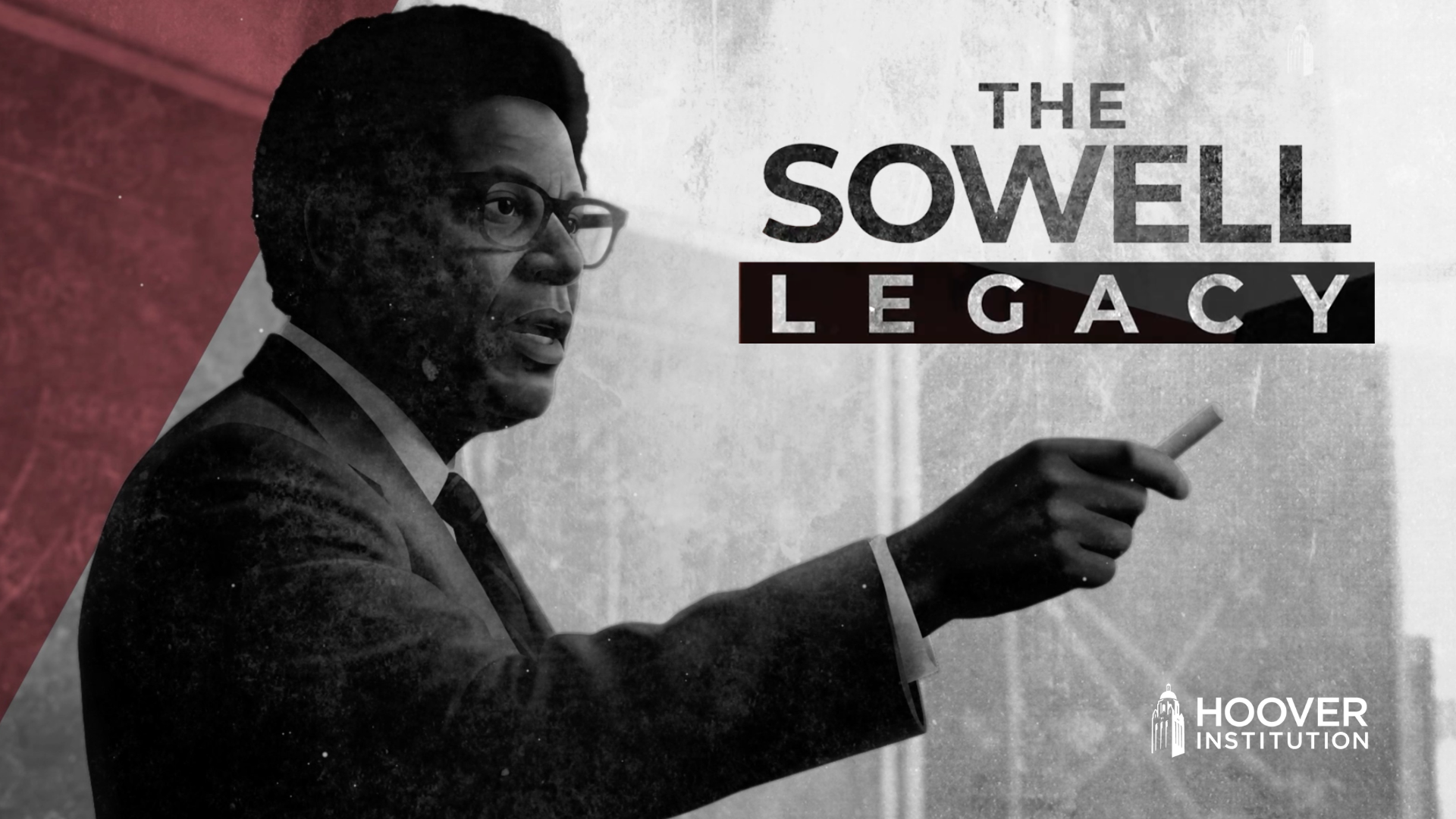





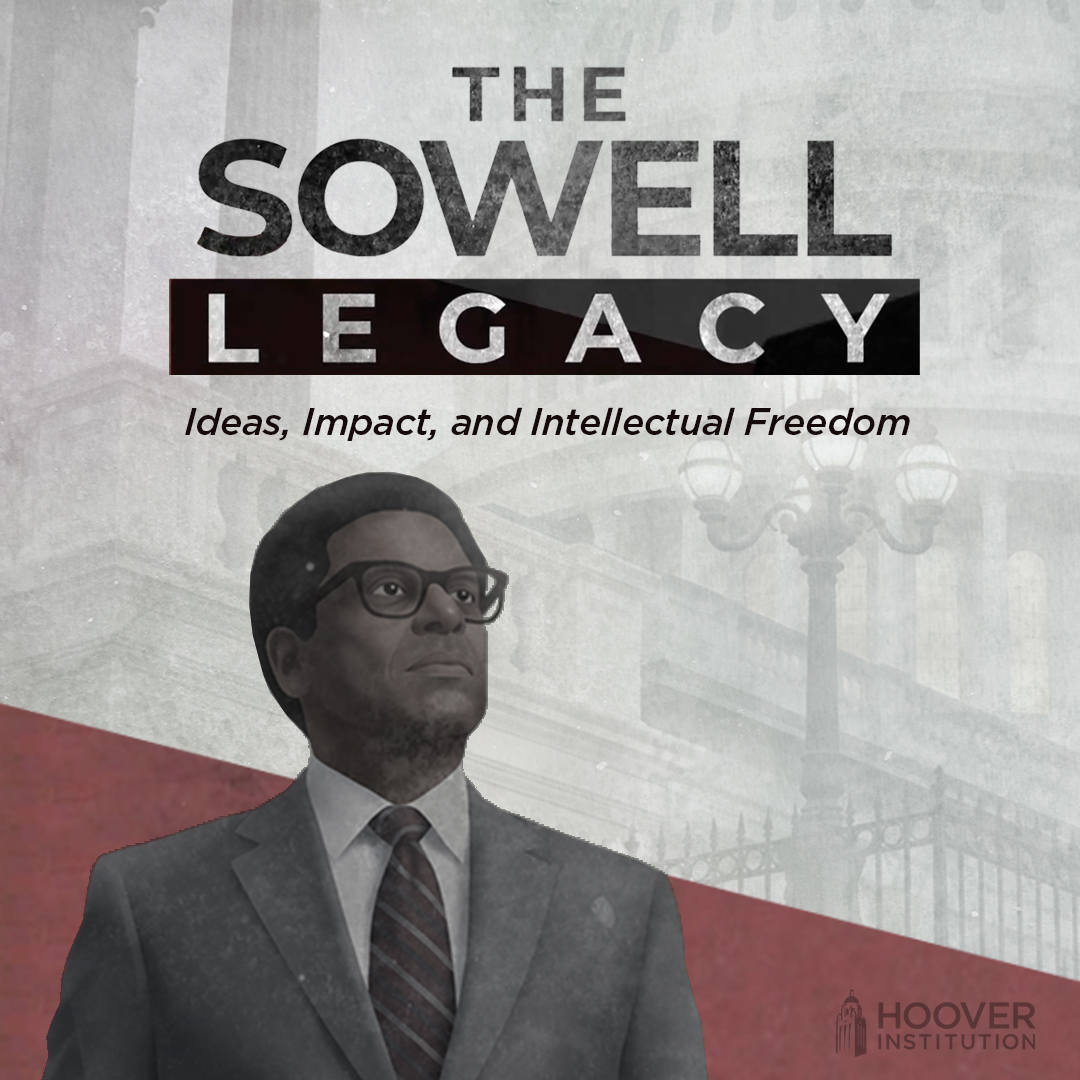
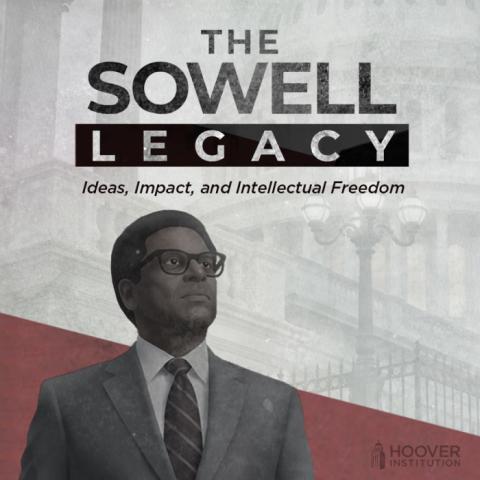
Hoover Institution (Stanford, CA) — On Thursday, July 30, the Hoover Institution will premiere The Sowell Legacy, a richly produced original series combining conversations, archival footage, photography, animation, and visually story telling on the life, work, and enduring influence of one of America's most consequential economists and public intellectuals, the inimitable Thomas Sowell.
Released throughout the summer and fall across Hoover's digital platforms, the series draws on Hoover's landmark 2025 Thomas Sowell Legacy Conference and brings together leading scholars, policymakers, educators, writers, and public intellectuals to reflect on Sowell's extraordinary career and the impact of his ideas.
The series opens with a conversation featuring Victor Davis Hanson, Sir Niall Ferguson, and Coleman Hughes exploring one of the defining yet often overlooked dimensions of Sowell's scholarship: his work as a cultural historian. The discussion examines how Sowell's writings on race, migration, conquest, and civilization placed American questions within the broader sweep of world history, showing that his historical perspective is essential to understanding both his perspectives on economics and society, as well as his enduring influence.
Across six episodes, participants examine Sowell's intellectual journey—from his upbringing in Harlem and service in the United States Marine Corps to his emergence as one of the most influential thinkers of the modern era. The series explores the experiences that shaped his worldview, the scholarship that established his reputation, and the principles that guided his work across more than six decades of public life.
"Thomas Sowell transformed how millions of people think about economics and policy by illuminating the role of incentives, knowledge, and institutions in shaping human outcomes,” said Hoover senior fellow Steven Davis, who together with distinguished visiting fellow Glenn Loury co-chaired the conference. “This series brings together voices from across disciplines to explore the extraordinary breadth of his scholarship and its profound and enduring influence on economic thinking, public policy, and our understanding of society.”
"Thomas Sowell's legacy is not simply the body of work he produced, but the example he set as a scholar who pursued truth wherever it led. Throughout his remarkable scholarly career, he has challenged assumptions, resisted intellectual conformity, and insisted that ideas be judged by evidence rather than ideology,” said Loury. “This series invites new audiences to engage with the questions that have animated his work for more than six decades and to discover why his ideas continue to shape conversations about economics, education, culture, and public policy."
Featured participants include Justice Clarence Thomas, Sir Niall Ferguson, Victor Davis Hanson, Glenn Loury, Roland Fryer, Charles Murray, Ayaan Hirsi Ali, Ian Rowe, Coleman Hughes, Kemi Badenoch, Michael Boskin, John Cogan, David Henderson, and others whose own work has been informed by Sowell's scholarship and example.
Episodes examine Sowell's contributions to economic thought, his writings on race and culture, his critiques of prevailing orthodoxies in education and social policy, and his steadfast defense of intellectual freedom. Drawing on discussions of landmark works including Basic Economics, Knowledge and Decisions, Race and Economics, A Conflict of Visions, Sowell's culture trilogy, as well as numerous essays and columns, participants explore the questions that animated his work: how knowledge is transmitted, how incentives shape behavior, how culture influences outcomes, and what institutions best support human flourishing.
The project grew out of a two-day gathering at Hoover that convened scholars, writers, educators, policymakers, and public leaders to assess Sowell's contributions to American intellectual life. The resulting conversations illuminate both the breadth of his scholarship and the uncommon independence of mind that has distinguished his career.
As questions of economic opportunity, education, culture, and civic life continue to animate public debate, the series highlights the enduring relevance of Sowell's commitment to facts, reason, and intellectual independence.
Following its July 30 premiere, new installments of The Sowell Legacy will be released throughout the summer and fall across Hoover's digital platforms. For more information on the series, visit hoover.org/sowell-legacy.
For coverage opportunities, contact Jeffrey Marschner, 202-760-3187, jmarsch@stanford.edu.