




Hoover Institution (Stanford, CA) — The Hoover Institution Library & Archives has acquired two new collections of material related to the life and work of philosopher Eric Hoffer, author of The True Believer (1951), a landmark post-WWII study of totalitarianism that explores the psychological causes, nature, and appeal of mass movements and fanaticism.
Hoffer, whose collection is housed at Hoover, was a prominent social critic who earned the Presidential Medal of Freedom in 1983. The son of German immigrants, Hoffer spent most of his early life working as a stevedore on the San Francsico docks while also writing, reading, and publishing. In 1964, he became an adjunct professor at The University of California, Berkeley. He was first launched into the public eye by being endorsed by President Dwight D. Eisenhower during a press conference; Eisenhower considered The True Believer one of the best tools for understanding Nazism and communism and often distributed copies of the book at the White House.
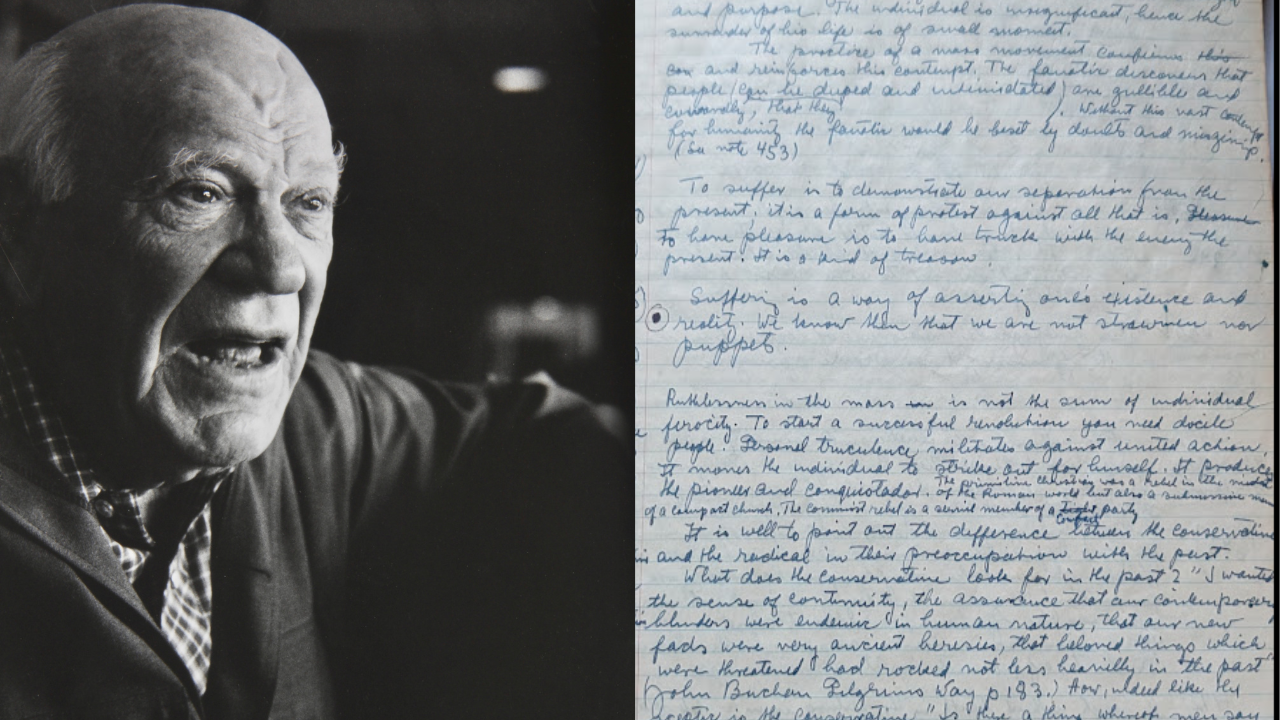
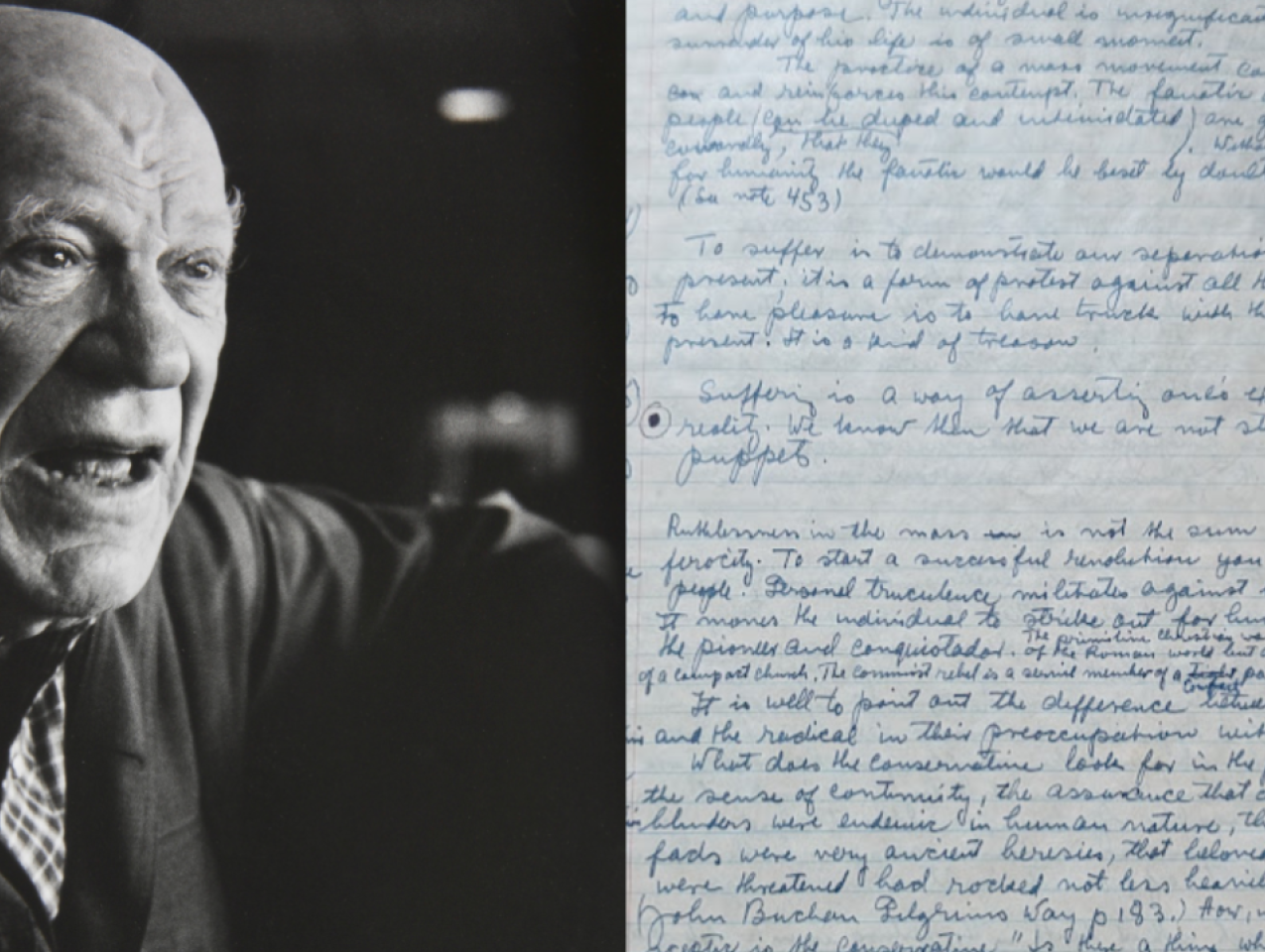
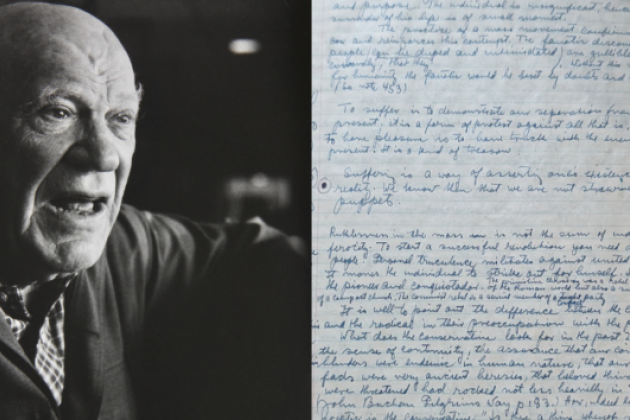
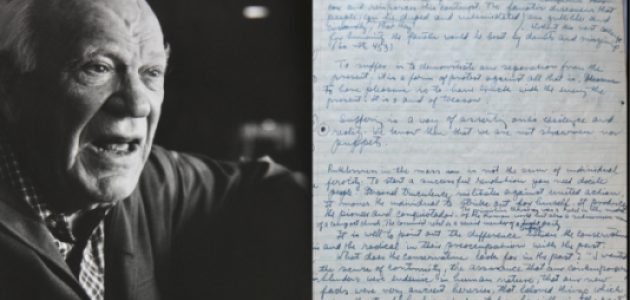
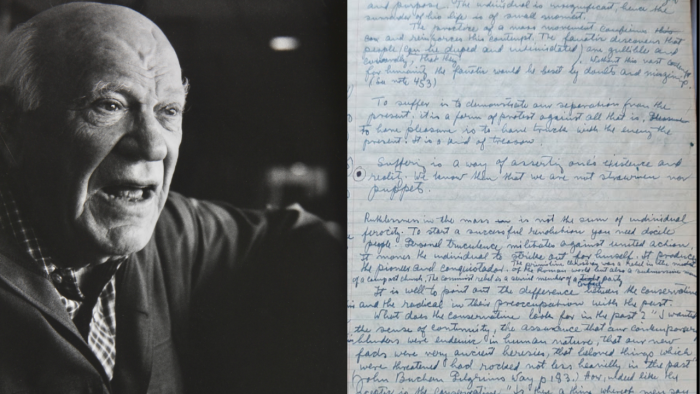
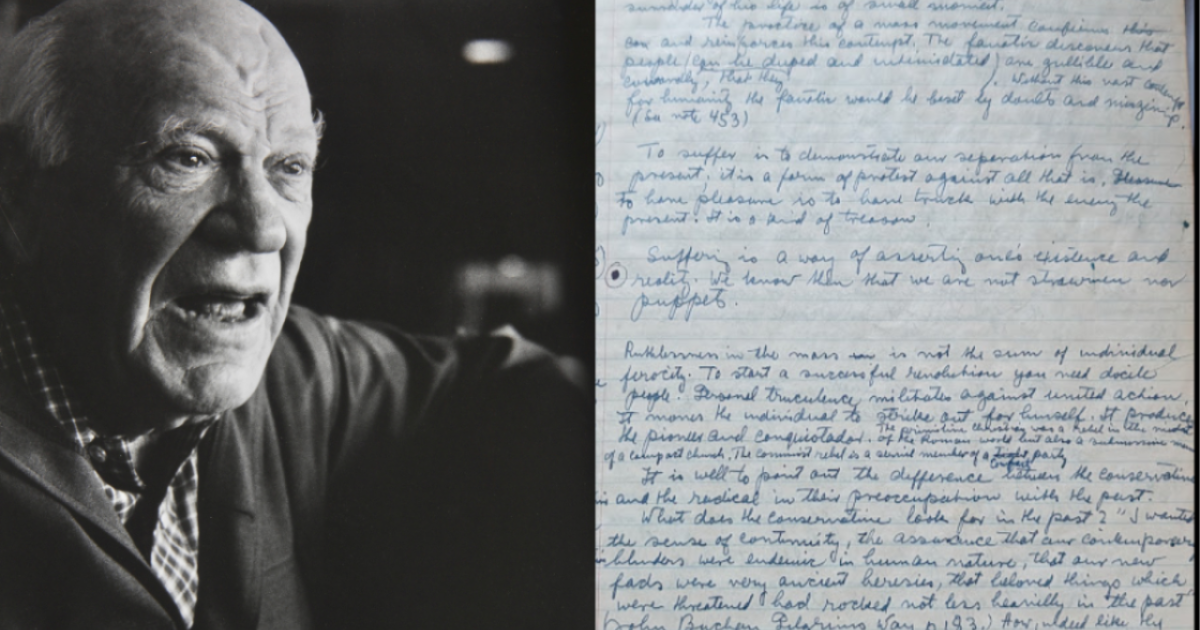
Hoover’s new Dan Stroud collection consists of photographs, negatives, and color photo slides featuring Hoffer. Stroud, a prominent Dallas photographer, was one of the few documentarians allowed to chronicle the movements of the notoriously solitary Hoffer. Many of the photographs were taken in 1977 during an interview Charles Kittrel, an executive of the Phillips Petroleum Company, conducted with Hoffer. Kittrel had invited Eric Hoffer to speak in Washington DC at the annual meeting of the company, in front of a crowd of over 3000 people. Other photographs feature candid shots of Hoffer visiting with Kittrel and his family, as well as images of Hoffer in his spartan apartment in the Bay Area late in his career. The collection also includes impressive photographs of Hoffer interacting with students late in his career.
Mr. Stroud is currently working on a book entitled, Insights from a Stranger, based in part on his time with Eric Hoffer. He describes Hoffer as a striking polymath:
Those who have merely obtained lofty stations in life are no match for an individual of great wisdom and poise. Even in a room full of powerful business leaders and politicians, an individual in possession of a great depth of wisdom and foresight cannot help but separate themselves from others, if only through osmosis. It is only natural that people like Albert Einstein, Richard Feynman, Carl Sagan, Isaac Asimov, or people like Wilbur and Orville Wright would, in their time, dominate the conversation in a room full of people, but so too could a man who manually loaded and unloaded ships for living… that is, if his name was Eric Hoffer.
The Library & Archives has also acquired the papers of Lister Stacy Cole, a close friend and associate of Hoffer’s. The donation consists of approximately forty handwritten notebooks created by Eric Hoffer, as well as photographs and ephemera (including Hoffer’s iconic leather cap and reading glasses). Lister Stacy Cole (known to as “Stacy”) was a close friend of Eric Hoffer’s for the last fifteen years of Hoffer’s life and a history professor for thirty years at Ohlone College in Fremont, California. As a graduate student in Texas, Stacy had read and admired the works of Hoffer, so when he learned that Hoffer was holding office hours at U.C. Berkeley Stacy attended, introducing himself. This began a tradition of weekly visits. After Hoffer stopped holding office hours at the university, he and Stacy would typically meet once a week at Tommy’s Joint in San Francisco. Hoffer gave Stacy a group of his notebooks and personal effects, which Stacy kept until his death at 91 years old in 2025. His daughters, Elena Cole and Heather Cole, felt that Stacy’s collection of Hoffer’s notebooks would add to the philosopher’s legacy and collection at Hoover.
The Hoover Institution would like to thank Dan Stroud, Helen Cole, and Elena Cole for their generous donations to the Library & Archives’ nexus of materials on Eric Hoffer. The two new collections are currently being processed and will soon be made available to researchers interested in the timeless philosophical writings of Hoffer.