







The Putin dictatorship and the “holier than thou” regime in Iran have unwillingly and unwittingly each given our government and our military the gifts of foreknowledge and time. We should unwrap these gifts with alacrity.
Despite the painful lessons of our recent wars, our armed forces have been able to preserve our deeply flawed force structures; our irrational weapons acquisition system; and our thus-far bullet proof belief that swift, decisive victories are just around the corner; and that any actual events that appear to question our vision of the future of warfare are just anomalies (indeed, our military jargon desperately needs a new term or acronym for relentless, repetitious “anomalies”).
The ongoing catastrophe of Russia’s attempt to gobble up Ukraine in a fortnight revealed the vulnerability of a military obsessed with big wars and legacy systems. Observers within the American military ecosystem have warned for decades about our addiction to hyper-expensive weapons that are few and fragile, not reparable on the battlefield or at sea, and impossible to surge-produce in a large-scale, extended war. But would-be reformers could never gain much grip against the cyanide cocktail of defense-industry monopolies and greed, military nostalgia for the “last good war,” and willful blindness to how the world and warfare have changed and are changing.
The Ukrainians showed us that motivation and morale are superb defensive weapons against opponents who don’t want to be there. Then they demonstrated that Goliath’s gleaming armor could not resist a stone picked up from the ground. Drones are hordes of Davids. The Russians—and we—are Goliath.
We have been warned.
Ukraine also previewed how wildly virtually every military has underestimated the consumption rate of precision munitions. And we can no more sufficiently surge production of our most effective guided munitions than we can rush hundreds or, yes, thousands, of their launch systems to a theater of war.
The one good thing that may come of our self-lacerating war of whimsy with Iran is the reinforcement of a lesson even the dullest flag officer can understand—that, when the munitions bunker is empty, it’s empty. And if an on-off, sideshow war with Iran threatens to consume our wartime stocks (to little result), how could we expect to outlast a war with China?
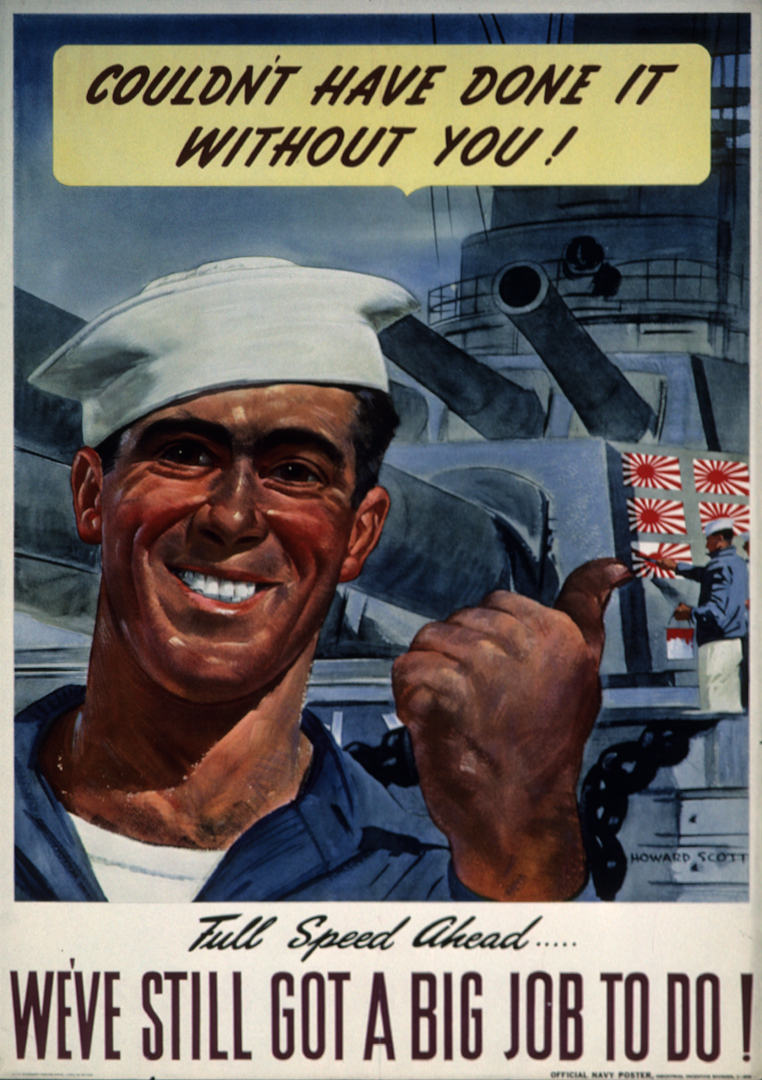
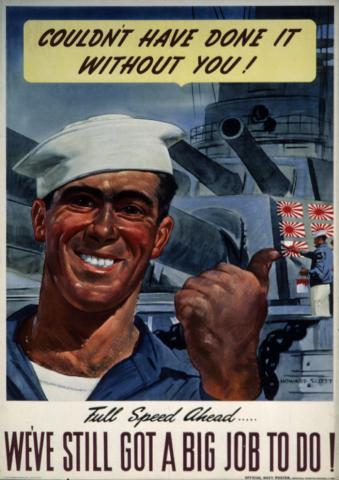
We were given a similar gift of time to react once before, on the eve of WWII. Full-scale war erupted on September 1, 1939, but we were not involved in combat for twenty-seven vital months. Our famed eve-of-war Louisiana Maneuvers involved horse cavalry and recruits issued broomsticks in place of rifles. When the Stukas struck Warsaw, our active forces were smaller than Romania’s or Portugal’s.
Fortunately, the men at the top of our government consumed their lessons avidly. When Japanese carrier aircraft struck Pearl Harbor, we were already well on our way to industrial mobilization and fielding 110 Army divisions, as well as the largest navy the world had ever seen. We were lucky in our leaders and in our stage of industrial development.
Today, in madcap fashion, we buy hyper-complex weapons of which we would rapidly run short and which we could not replace for years. Our current stand-off with Iran also exposes, yet again, the fantasy that air power alone can win wars. I’ll stand by what I wrote three decades ago: Expecting to win even a minor war solely from the air and long-distance fires is like asking the New York Police Department to stop crime from thirty-thousand feet.
So…Russia’s Ukraine debacle and our Iran embarrassment have given us unnerving glimpses of war’s future. We find that our cherished weapons systems are ever less survivable and of increasingly marginal relevance. Cheap, mass-produced weapons are back, but the one-time “arsenal of democracy” isn’t producing them in adequate numbers. We have to gild every lily.
In addition to the legalized corruption that deforms our defense industry, we also have an ignorance problem: Our officer corps is historically illiterate. Over centuries and millennia, wars have usually been long, not short. The Blitzkrieg model is largely a modern, transient phenomenon that had Napoleonic-era roots but really only lasted from the Austro-Prussian War of 1866 until the fall of Berlin and the Japanese surrender in 1945 demonstrated that “lighting wars” were, in fact, campaigns that did not deliver lasting strategic victories. Thereafter, as we busily misread the implications of the nuclear era, the world reverted to its immemorial practice of endless wars of blood and faith.
Can we finally recognize that we are Goliath, not David? That our hubris makes us vulnerable to the little guy we underestimate? Probably not. After all, ours is the military that, in attempting—half-heartedly—to understand the enemy we faced in Iraq, glorified the Hollywood narrative of Lawrence of Arabia as the relevant metaphor, utterly missing the point that we were the Turks.
Ralph Peters is a former U.S. Army officer and author.

