



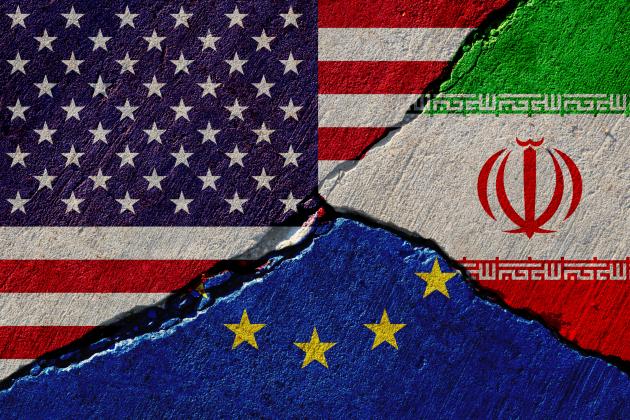
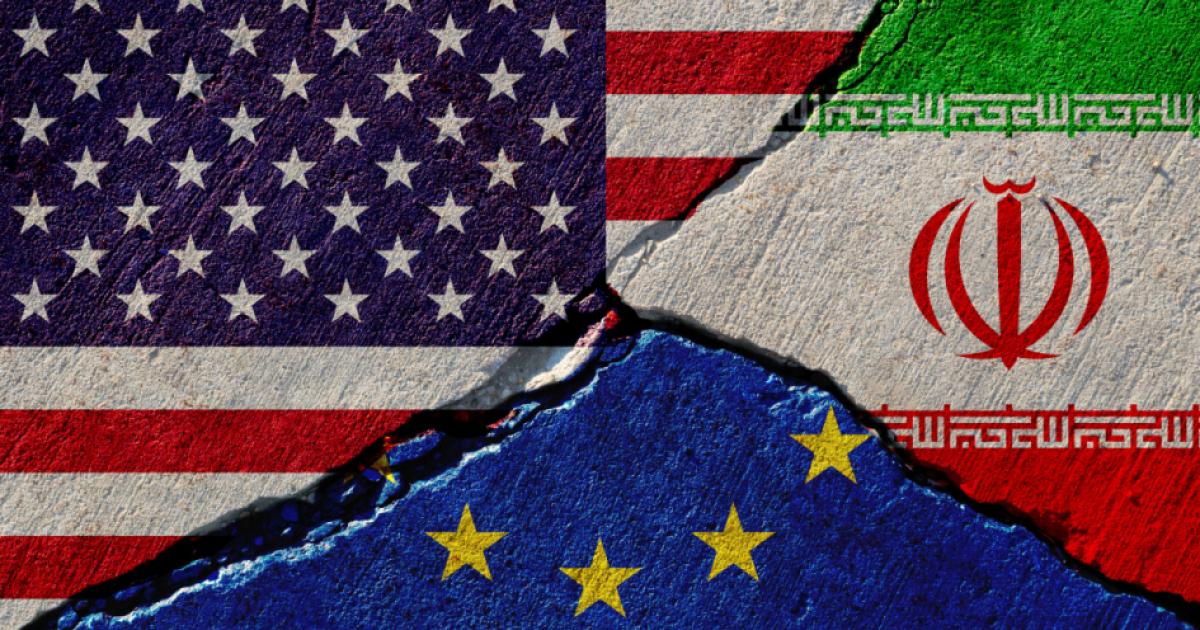
As if there were not enough differences between much of Europe and Washington, they rose to new levels after President Trump launched military operations against the Iranian regime on February 28. The list of problem areas was already long, even if assessments of their gravity differ based on politics (attitudes towards Trump), issue area (trade, defense, culture), and location (Europe or the United States). Operation Epic Fury added another major stressor to the list, worsening European attitudes towards the Administration and vice versa, and setting in motion trends that will shape transatlantic relations well into the future.
While the negative European reactions to the operation are well known, Europeans may not sufficiently appreciate the implications of their actions. This is important because the White House has taken note of the minimal European solidarity on a major international problem. Even if reasonable people differ on the wisdom of the operation, European reactions have reinforced doubts about their reliability that could negatively shape U.S. reactions in the event of future international conflicts where interests, priorities and capabilities may differ across the Atlantic.
Just as U.S. politicians should look hard at their rhetoric about Europe, European leaders need to do the same about the United States to ensure effective future transatlantic responses to challenges facing the West. The reluctance or refusal of European countries to support Washington during recent Middle Eastern conflicts undermines U.S. support for NATO and signals to adversaries that they can challenge the West with impunity, because the default European position so often is “we disagree and we won’t help.”
Europe Reacts Badly to the Iran Operation
European governments have been frustrated, annoyed, even furious about President Trump’s approach to Iran. Despite no love lost for the regime, they have responded in an almost uniformly critical and unhelpful manner, which reflects a long-held preference for stability über alles that led them to put up with decades of provocations, endless negotiations, weak agreements, and violations, not to mention terrorism and instability in the broader Middle East and beyond, to ensure the flow of energy and avoid triggering conflict. In this sense they were not unlike pre-Trump U.S. administrations that thought they could negotiate agreements the regime would keep, postponing resolute action or acquiescing to behavior from Tehran that, since 1979, has rejected international norms.
So it was not surprising that no NATO or EU member state publicly welcomed Operation Epic Fury, even if privately most leaders were fully aware of the brutality and malign influence of the regime and the danger it represented to the region and beyond and would much prefer a different government. Most EU leaders considered U.S. actions a breach of international law, with some going so far as to call it “aggression,” while others were angered about the lack of consultation. Initial reactions ranged from condemnation and denial of logistical and other support to unenthusiastic or ambivalent responses. Spain’s response was the worst, with Prime Minister Sanchez denouncing it and denying permission to use U.S. facilities at Moron and Rota for the operation. France denied U.S. overflights and Italy declined to approve operations from Sigonella on procedural, legal, and treaty grounds. Prime Minister Meloni’s early position of “neither condemning nor condoning” the action changed soon thereafter to more explicit criticism. Prime Minister Starmer initially declined the use of UK bases arguing that he did not believe in “regime change from the skies” and was acting in Britain's national interest, although he reversed course after President Trump and others called him out on it.
German Chancellor Merz initially stressed he would not “lecture” friends, expressing support for the strikes in his March 3 meeting with President Trump (four days after the actions began) as a necessary response to decades of failed diplomacy regarding Iran’s nuclear program and its destabilization of the broader region. However, Merz also soon changed his tune, opposing “endless war” and calling the collapse of the Iranian state not in Germany’s national interest. He regularly calls for an end to the Iranian blockade of the Strait of Hormuz, yet his defense minister has repeatedly said Berlin will not participate militarily in the operation, calling the conflict an "economic catastrophe" and emphasizing that Germany does not want to get “sucked into the war.”
European commentators were quick to interpret these official responses as evidence that: 1) the conflict had further eroded trust and confidence in the United States as an ally and security partner (although they meant only the Trump Administration and not the Democrats or never-Trump Republicans, whom they generally prefer as partners); 2) the Administration’s actions were pushing the United States and Europe further apart; and 3) they were heightening the risk of a breakup of NATO -- despite the fact that the alliance was not participating in Epic Fury -- and accelerating a transatlantic divorce. They also began to pronounce the “war” a “failure” or “lost” as early as month or two after operations started and have tended to interpret developments in the most negative and pessimistic ways possible. Private European assessments of Trump’s decision to launch the operation and his handling of the conflict have intensified as it has continued.
Most European leaders, while opposed to the conflict, angered about its economic implications, and worried about its spread beyond Iran, publicly stress the shared objective that Iran should not develop nuclear, ballistic missile, and advanced drone capabilities and consider the regime a threat to peace and stability in the region and beyond. Many Allies quietly facilitated U.S. military logistics and operations through base access, overflight rights, and provided other discrete forms of support. The strongest public backing has come from NATO Secretary General Rutte, who has consistently offered constructive assessments and reiterates that Iran must never obtain a nuclear weapon.
European Commission leaders have taken somewhat balanced positions, with President von der Leyen initially not condemning the initial U.S. strikes, balancing criticism of the economic fallout with alignment on core security goals, and strongly welcoming diplomatic progress when it appeared. Her declaration that “there should be no tears shed for the Iranian regime” differed little from that of HR/VP Kaja Kallas, who initially focused on the chaos and instability the regime had been sowing, even as she stressed the conflict was “not Europe's war.” Others complained that Europe was paying the price for Trump’s war. In March, von der Leyen faced strong criticism for saying the debate over whether the war was a legal “war of necessity” or an illegal “war of choice” missed the point and that Europe needed to accept geopolitical realities rather than police its allies. She and other EU leaders have been quick to support every Trump effort to de-escalate and negotiate ceasefires, while consistently stressing the need for the conflict to end.
Iran Conflict Highlights Very Different Approaches to Middle East
European leaders’ reactions brought into sharp relief how differently they view policy toward the Iranian regime and the broader Middle East. While most chose not to confront Trump, an undercurrent of opposition, if not defiance, has been present from the beginning of the operation. Their actions reflect a deep-seated preference for the status quo, which for decades kept European economies supplied with energy, supported their trade, and to a certain extent minimized war, even as the regime spread violence, instability, and poisonous ideology throughout the region and beyond. It also buttressed European wishful thinking that diplomacy could restrain the mullahs, that their defense capabilities were sufficient, and that if any serious problems arose, the Israelis or the Americans would take care of them.
This intellectual framework, as represented by a sense of denial as well as deep and widespread preference for negotiation and soft acquiescence to the Islamic Republic, underpinned European policy for decades, producing strong support for the Joint Comprehensive Plan of Action and other diplomatic engagement, despite the regime’s violations, provocations, and perennial prevarication. This approach -led by E3 states France, Germany, and the United Kingdom but shared by the EU Commission and most member states - produced a semblance of stability in the Persian Gulf region but never addressed, let alone confronted, the underlying causes of conflict or the long-term challenges and regime’s malign activity, which had long been a major U.S. focus, particularly but not only on the Republican side of the isle. This approach had the effect of postponing for years a more resolute approach to the mullahs, in effect “kicking the can down the road.”
These deeply held preferences clashed head on with those of President Trump, who had long criticized “endless wars” and Middle Eastern entanglements, but had staunchly and vocally opposed the Iranian regime since at least the mid-1980s and backed resolute steps to ensure it would never obtain nuclear weapons. In contrast, the EU and most of its member states preferred to live with the devil they knew, while Trump was more inclined to confront the problem, even against reservations from his cabinet, and in February took advantage of a rare window of opportunity to reduce, if not neutralize, the long-term threat the mullahs and IRGC posed.
This highlighted another major difference between Europe and the Administration. When European leaders look at the Middle East, they tend to see Israel and the Palestinians as the primary problem to be managed, if not resolved, which they put at the center of their policy for decades. Of course, they also see Iran as a problem, but their actions betray a fixation on Israel’s behavior and the Palestinian issue that outweighs all other regional problems and can seem to border on an obsession. EU foreign policy doctrine, codified in the 2003 European Security Strategy, frames the conflict as “Arab-Israeli,” concluding that “without resolving this, there will be little chance of dealing with other problems in the Middle East.” This, of course, is the Israeli-Palestinian conflict, which the EU has prioritized over other regional issues because it views it as the key to peace and stability in the broader region.
This European preference largely unites leaders, the political class, and the commentariat and manifests itself in the mantra of the “two-state solution,” even as this outcome seems ever less likely. It also lies behind huge financial support via the UN, EU, and bilateral aid programs for Palestinian institutions dominated by terrorist organizations Hamas, Hizballah, Palestinian Islamic Jihad, and the Islamist Muslim Brotherhood, despite evidence that funds have long been diverted from humanitarian and institution building to terrorist purposes, including since October 7. For UNRWA alone, the sums amount to an estimated more than USD one billion. It also is reflected in a certain elite consensus that views any alternative approach as radical and unfounded, if not stupid.
This mindset manifests itself across Europe in the form of broad popular support for “Palestine,” growing criticism of Israel, increasing manifestations of anti-Semitism, red-green alliances between Socialist, Social Democratic, and Green parties and Muslim voters in Western Europe, and decades of political support for almost unfettered migration, often from the Middle East and Muslim majority countries, as well as multiculturalism as an unquestioned social good. For decades, political parties have given outsize and inordinate influence to Muslim voters and the issue of Islam in election campaigns and the formation of governments, as well as in their foreign policies. The prioritization of the Palestinian cause in European foreign policy, as well as the role of Islam, Muslims (and Islamists) in domestic politics has accentuated differences with U.S. administrations, especially when Republicans hold the White House and/or Congress and has become particularly visible during the second Trump Administration.
In contrast, President Trump views Iran and the IRGC as the biggest problem and highest priority in the Middle East, even as he also sees the Palestinian issue as important. His overriding concern has been broader: to mitigate, if not remove the threat from Tehran’s nuclear and missile program, its Hamas and Hezbollah proxies, its regional destabilization and, if possible, enable the country to take a more democratic and constructive path; for now, he views other issues as secondary. Trump reportedly has even more ambitious plans -- a new regional order – which upends decades of conventional policy in the Middle East. This thinking lies behind his strong support for Israel’s efforts to destroy Hamas and Hezbollah once and for all, despite the negative impact this has had on Palestinian civilians, while Europe has focused on Palestinians and criticized Israel’s actions. Epic Fury capped years of U.S.-Europe differences over how to deal with the entire region that came to the fore after the Gaza war ended.
On Gaza, European leaders have made a virtue out of a necessity, accepting U.S. leadership after hostilities ended via the Board of Peace (BOP), despite being critical of its concept and unimpressed with its results. Kallas publicly slammed the BOP as “Trump’s personal vehicle” that removed any accountability to Palestinians or the UN, did not join the BOP, but the EU will align with the BOP on project financing. Spain completely disagrees with the BOP, seeing it as an attempt to bypass the UN and the EU, chief funders of the Palestinian Authority. European leaders also long considered the Administration too tolerant of Israel’s use of force, too tough on the Palestinians, and insufficiently supportive of the two-state solution, international law, and the UN. Nevertheless, the EU coordinated with Washington, because it had the most influence with Israel and other players, and endorsed the ceasefire. The EU also contributed civilian teams, such as EUBAM Rafah, to assist the transition to an International Stabilization Force.
U.S.-EU differences on the West Bank remain significant: on settlements and sanctions on them, trade bans, and diplomatic recognition for the Palestinians. European leaders recently made clear that they continue to take a much stricter view on settlements, with the UK and 11 EU member states breaking again with the Administration by banning imports from certain West Bank settlements. Indeed, the EU has regularly imposed trade embargoes on goods from settlements and has sanctioned individuals and companies connected with them, which looks like economic warfare. In contrast, the Administration has taken a generally negative stance against sanctions, refusing to back them, with U.S. Ambassador Huckabee even threatening repercussions against the UK. The Administration does not support Israeli annexation of the West Bank but rarely condemns specific projects. Sixteen EU member states recognize the State of Palestine and advocate for a two-state solution, while criticizing the Administration’s approach.
Europe also has different priorities on Lebanon, even as it shares U.S. goals like sovereignty for the country, defanging Hezbollah, and security for Israel's northern border. Europe (particularly France, Italy, and the UK) sees UNIFIL differently, agreeing with the UN that it is a “stabilizing factor” and essential for now, while it plans its own mission to assist the Lebanese Armed Forces (LAF). Washington considers it a “failed mission,” too passive for standing by while Hezbollah built massive tunnel complexes and other infrastructure, and supportive of the status quo. While the EU has spent vast sums to stabilize the country, it is cooperating with the Administration on funding and training the LAF so it can reestablish control over southern Lebanon. Kallas has been helpful with the mission to train and advise the LAF, arguing that “the mission will make a crucial contribution to Lebanon’s security,” while welcoming the Trilateral Framework between Israel and Lebanon and pushing Beirut on financial and judicial reforms. European leaders tend to object to Israel’s use of force there but have not sought confrontation with the United States. Diplomats and military officials, particularly from France, Italy, Germany, and Spain, are currently discussing how to sustain their presence in southern Lebanon and the Eastern Med once the UNIFIL mission ends.
These differences are sufficiently important that it is difficult to find European leaders or prominent pundits who speak out in support of the Administration’s approach to the Middle East, even if they are not unsympathetic to its goals. This does not mean Allies do not back them – indeed there is overlap -- or that they do not provide discrete assistance or privately signal solidarity; in diplomacy there are often differences between leaders’ public and private messaging, and there may be more than meets the eye, but major disconnects on policy remain. Chancellor Merz has given President Trump nothing like his praise of Israel in June 2025 for doing Europe’s “dirty work” via its operations against Iranian military targets, even if he and Macron have periodically been supportive of positive diplomatic progress on various conflicts. Aside from NATO Secretary General Rutte, who remains the most forthright leader in the alliance, the silence has been deafening.
A Weak Europe Copes and Turns Away
Since February 28, unable to reshape U.S. policy or the direction of Middle Eastern developments, European leaders have adopted coping and hedging strategies. Unwilling to confront or provide much support to the White House, they have been walking something of a tightrope, are waiting Trump out, and are trying to make the best of a bad situation. They want a return to the status quo ante as soon as possible, at least as far as the Strait of Hormuz and energy and trade is concerned. These conflicts have also reinforced a widespread sense in the political class that Europe must be more sovereign, independent, capable, and resilient. Pundits assert there is waning faith in American leadership, while some call the European response “quiet quitting.” All of this has buttressed advocates of European strategic autonomy, who now have additional ammunition to argue that with the Administration going its own way in the Middle East, contrary to Europe’s interests, Europeans must do as well to assure theirs.
European leaders have pursued modest diplomatic initiatives with regard to Gaza, the West Bank, and Lebanon, but on the biggest problem – Iran – have remained largely on the sidelines, scrambling to obtain fossil fuels from other suppliers while accelerating their shift away from imports and trying to electrify faster, plowing more resources into green energy programs, subsidizing industry and consumers, rebuilding their military capabilities, and focusing on the Russia problem and supporting Ukraine. Once major actors, they remain players with major equities in the region but have resigned themselves to a second tier and more observer role without the ability to shape outcomes -- a result of sluggish economies, weak militaries, and reduced diplomatic heft.
Their priority is to weather the current turbulence and to protect key equities with the United States and others. This approach reflects one of the main messages in EU Commission President von der Leyen’s January address to the European Parliament -- that the post-war rules-based order was permanently over, that Europe faces an unpredictable, transactional world shaped by raw power struggles, and that it had to develop a realistic, assertive, and interest-driven foreign and security policy in response. European leaders have since then intensified their focus on economic, military, and technological self-reliance, including strengthening their defense readiness and reducing dependencies on external powers, in short that it had “to deal with the world as it is now,” not as they would like it to be.
As the Iran conflict has dragged on, energy prices and economic costs have risen, and Tehran has widened hostilities to neighboring countries in the hope that they would pressure Trump to back down and agree to peace, the strong European preference for the status quo ante remains. European leaders may strongly dislike the Iranian regime, but they hate the higher energy prices, inflation, disruption, and lower growth even more and blame Trump for not ensuring the Strait of Hormuz remains completely peaceful and not preventing Iran from widening the conflict to the broader region. The costs to Europe have run into well over one hundred billion Euros, putting all economies under much more stress than they already face. What in late April was costing an estimated Euros 500M per day by the end of September had added at least Euros 100B this year to Europe’s energy bill alone.
EU and NATO member states have faced domestic political consequences as well, with parties weaponizing the Iran conflict in key elections this year like Germany and Sweden. The Alternative for Germany (AfD) capitalized on economic anxiety related to Iran to drastically improve its showing in three states of the former GDR in September. The Iran conflict siphoned off support for both Chancellor Merz’ Christian Democratic Union (CDU) party and that of his Social Democratic Party (SPD) coalition partners, whose leaders took pains to stress that Iran was “not Germany’s war.” In Sweden, all major parties made Middle East issues part of their campaigns, implicitly or explicitly linking negative consequences to U.S. policy. In France, the recent almost intifada-like “student riots” may further sour voters on leftist parties.
European critics have also expanded their opposition to the Administration’s approach to the region from the legal and economic standpoint, calling it a “strategic disaster” for Washington, stressing that Trump has made mistakes, and slammed it for upending decades of policy in the Middle East and threatening Europe’s interests. Many subscribe to the narrative that the United States is a declining power and that Trump’s mistakes mark the “End of the American Middle East.” Even those who sympathized with his goals are increasingly concerned about what they consider an open-ended commitment without a solution.
Concrete European military support or offers of future support have been sparse. European powers, led by the UK, France, Germany, and Italy, have resisted naval escort missions but have offered to contribute to a multinational maritime security or peacekeeping framework after a ceasefire is reached. Operation Aspides, the EU mission launched in 2024 to secure EU interests in the Red Sea, has faced resource constraints, with Italy and Greece providing the largest number of ships. Some 20 countries have signed on, and NATO has tried to buttress freedom of navigation in the region before the French and UK-led initiative, the Multinational Military Mission, commences. So far, however, only Greece and Italy really support the mission, and it has little impact as Houthi attacks against targets in the region continue unabated. The EU’s Kallas wrote to member states in September to try to assemble at least 10 ships. Greek FM Gerapetritis told Secretary Rubio during his recent visit that Athens was willing to provide maritime assistance in the Strait of Hormuz once there is a viable peace process.
Iran Highlights Question of European Reliability
The White House knew European leaders were not wild about its Middle East policy and that an operation against Iran would be controversial and unwelcome. It knew it was facing a European Commission, most of whose member states would oppose the operation, making EU support impossible. It knew European policy instincts and preferences were deeply entrenched in favor of the status quo, were strongly risk averse, and were in any case deeply resistant to using European military force beyond the continent’s borders. It knew the regime would likely close the Strait of Hormuz, which would cause major and negative economic consequences for Europe and increase its opposition. It knew all this would likely exacerbate existing transatlantic friction over defense, trade, and culture. But the Administration acted anyway, calculating that there was a better than even chance the operation would achieve positive results and that a better opportunity to reduce the Iranian threat might not arise for quite some time.
European leaders’ rhetoric and actions reinforced impressions in the United States that they opposed the operation in principle, despite considerable U.S. and Israeli military successes against Iran and the huge and favorable impact a positive outcome would have on European interests. The refusal by such important Allies as UK, France, Italy and Spain to grant access to, or relatively free use of, U.S. military assets located in their countries not only complicated U.S. military operations but more importantly fed a sense in the White House that European leaders were unreliable, even if they expected little support to begin with and if Allies did cooperate more later. President Trump has expressed his exasperation, if not fury, a number of times.
If the United States could not access its own assets in Europe in an operation it considered very important, then why should they continue to be based there? And what good were Allies who denied them access? These were some of the reactions circulating in the Administration in the ensuing months. There are, of course, strong reasons for the United States to maintain bases in Europe, but refusal of support prompted Secretary Rubio to comment that it could cause the USG to “reexamine the value of NATO” after the conflict was over. While the Administration has used language like this to press Allies to increase their military capabilities and assume more responsibility for their conventional defense, weak European support on Iran was poorly received.
The Trump Administration is accustomed to criticism, even pique and petulance, from European Allies, but it did not take kindly to such opposition, especially for an operation the White House considered so beneficial to the security of the West, Israel, the Middle East, and Europe. This intensified long-held doubts about Allies’ dependability in matters of geopolitical importance and preference for security on the cheap. After all, if some of the closest U.S. allies expressed only limited solidarity with attempts to neutralize the Iranian nuclear program, which all agreed was a major problem, when can they be relied upon? This concern flips the common European narrative that questions “U.S. reliability” on its head.
Moreover, with global conflicts proliferating and the axis of aggressors growing bolder, the United States is more likely to face threats or crises, and policymakers need to consider who might assist in dealing with them. European actions sent another signal that the traditional answer – European Allies, usually U.S. partners of first resort on any crisis – was not certain, because their answer to this latest challenge from a major malign actor was “we disagree and we won’t help.”
The Administration has taken numerous controversial foreign policy decisions, and European views on them are often not dissimilar from many found in the United States. Well-meaning and well-informed people disagree on the wisdom of Epic Fury and the follow-on operation. The positions European leaders have taken are no surprise in their policy and historical context. The White House did not consult Allies prior to launching hostilities; doing so is unlikely to have generated significantly more support, but it would have checked the consultation box and may have eased some pique. With the operation having had such a negative effect on European economies, where energy costs are already among the highest in the world and other economic activity was disrupted, no European leader could offer strong support without facing major political blowback. With Trump not popular in much of Europe, politicians who may have considered demonstrating stronger support were minimizing negative exposure. As the conflict continued with no end in sight, leaders were behaving according to predictable patterns.
Negative European reactions, however, were so quick that they suggested opposition to even giving the U.S. President an opportunity to mitigate a major international problem in the first place. To pronounce the operation a major mistake and a “failure” not long after it began suggested ritual anti-Trumpism, if not strategic myopia. The White House reaction may have been different if Allies had reiterated more regularly that the goals were laudable, slammed the IRGC harder for expanding the war to non-combatant countries, and wished him well while finding ways to support under the radar.
Trump has not made it easy for Allies to support him, but hardnosed European realists could have handled this case much better. Even if they hate Trump and thought the operation was a mistake, they should have given him the benefit of the doubt and hoped and prayed for its success, because he was taking such a risk to reduce the number of problems in the Middle East – with potentially positive results for them. Some in the White House may have hoped for a Maduro-type success, but others knew real success would take longer, if it was even possible at all. And regime change was never the primary goal, even if it would have been a very welcome outcome; the Administration had always focused first and foremost on Iran’s nuclear and missile programs and defense industrial base.
Most European leaders have adopted a decidedly pessimistic reading of the state of the conflict. They have bought into the narrative that “the war,” which has been kinetic for only a modest percent of the last seven months, is “lost,” a view that echoes critics in the United States. Indeed, the prevailing narrative is “the U.S. loses by not winning and Iran wins by not losing.” Large and expensive IRGC information operations have entrenched this narrative in Europe. In contrast, Trump spokesmen and independent analysts remind the public that the operation has hugely weakened the regime, its economy, and its military industrial base and defanged it for quite some time, even as it retains military capabilities and seeks to rebuild as quickly as possible. At a minimum the operation has delivered a major blow, which has set back the regime’s capabilities by years. The Administration’s case, however, has changed few European minds; it has not yet lost the conflict, but it has not won it in a traditional sense. And as the cost rises, it has a major financial aspect for the United States, while Administration assessments about the costs and benefits remain stubbornly different from those in Europe.
Nor has Trump been able to rely on once-aligned parties like Germany’s AfD, UK Reform, and France’s Rassemblement National (RN); all have strongly criticized the Iran operation, not only for the costs it has had for their economies. AfD co-leader Chrupalla pointed to Spain as a positive example after it restricted use of U.S. bases and demanded the U.S. withdraw military forces and nuclear weapons from Germany. UK Reform leader Farage pointed out the conflict was taking much longer than predicted, that its economic costs were too high, and that Trump needed to present an end game. He also criticized Trump’s threat that Iranian civilization would die as “over the top in every way.” RN’s Le Pen called Trump's war goals erratic with “catastrophic consequences.” Former Hungarian PM Orban has been silent since he was defeated in April.
The relatively few favorable voices, often located in the UK and Germany, such as Stephen Daisley, Jonathan Sacerdoti, Nikolaus Blome, and Norbert Röttgen, have faced criticism for backing Trump. However, even they have quieted as energy prices have risen and attitudes towards the war have worsened. One of the only pundits to strongly and unapologetically defend the operation is Douglas Murray who has long framed the conflict with Iran as a necessary crusade against a global “death cult.” He has also criticized Trump, but only when he has pivoted to a diplomatic track.
This lack of solidarity does not improve support for NATO in the Administration or across the population. The fact that the USG barely responded to hundreds of regime-caused casualties and attacks over the decades undermines arguments that this is a “war of choice.” European responses have been tone deaf when the West faces an adversary as hostile and ruthless as the mullahs and IRGC. The fact that Iran is not in the NATO AOR is an important consideration that means the conflict will not have a NATO response, but Europe has not demonstrated reliability in a pinch. This does not improve popular U.S. support for the alliance; indeed, it is the opposite of what is necessary. While American grassroots support for NATO and U.S. leadership abroad remains strong, it is stronger when Europeans share burdens and act like Allies. The Iran case provides the opposite argument: that European allies have been only minimally with Washington, even on a matter of such major importance.
Going Forward
By far the most popular view in Europe and the U.S. foreign policy community about the impact of Middle East issues on the transatlantic relationship is that it has made it worse. Most Europeans blame President Trump for this: for starting the “wrong war” or a “war of choice” that has negatively affected European interests and justifies their negative responses. Many Americans agree, but Trump has a point that the lack of European solidarity, if not support in such an important mission, is a major factor in the acrimony. Trump has used provocative language with Europe, which reduces supportive instincts, but so has Europe vis a vis the Administration. Even if there is something of a consensus that transatlantic differences over Middle East policy have accelerated rifts, there are counterarguments to comfortable, but self-serving, European certainties.
Iran is an example of the latter argument: European leaders should be more careful and strategic about their approach to conflicts beyond Europe because of how they could negatively shape U.S. reactions in the event of future conflicts where interests, priorities and capabilities differ across the Atlantic. Leaders both in Europe and the United States need to pay attention to their rhetoric and actions, lest they land badly and exacerbate existing differences. There has been a little good news in recent weeks. PM Burnham is an improvement over PM Starmer and the recent UK attribution of Iran’s involvement in the thwarted terrorist attack on RAF Fairford is an important gesture of UK support. Italian preparations for use of its navy to escort merchant ships rather than waiting to deal with the EU Aspides mission bureaucracy are as well. But these are more exceptions that do not address core problems.
Just as U.S. politicians should take a hard look at their assumptions, assessments, rhetoric, and prejudices about Europe, European leaders need to do the same about the United States to ensure more effective transatlantic responses to challenges to the West and to offer Communist China and Putin’s Russia as few avenues to divide and attack as possible. While the Iran case highlights the European angle, it applies to other current hotspots. President Trump singled out South Korea after Seoul declined a request for assistance, warning that “he would remember.” The last thing NATO and the West need is for Americans to conclude that Europe is reverting to past practice, especially after it has done so much to rearm and bulk up its military and other capabilities. The Atlantic does not need to grow wider, even as the United States and Europe see the Middle East very differently.
Matt Boyse is a Senior Fellow at the Hudson Institute and former Deputy Assistant Secretary of State.