







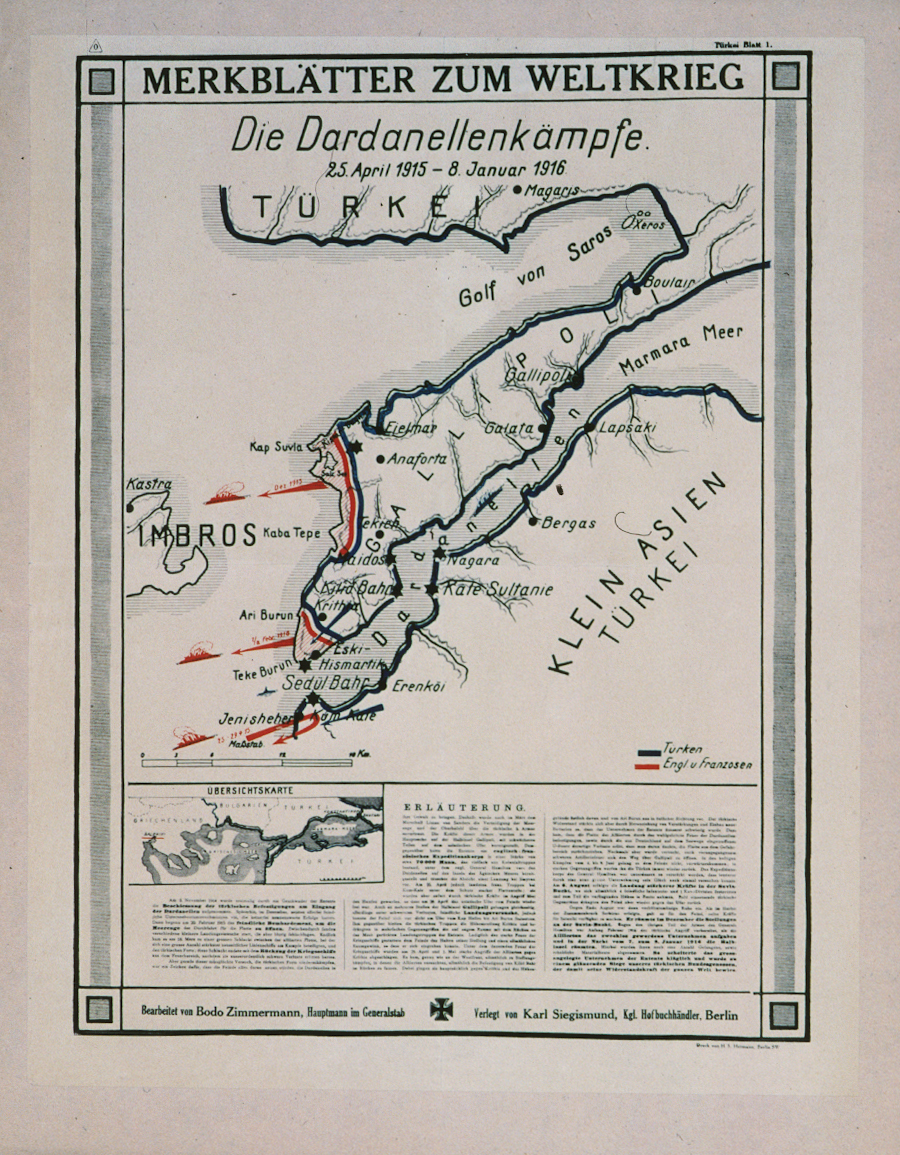
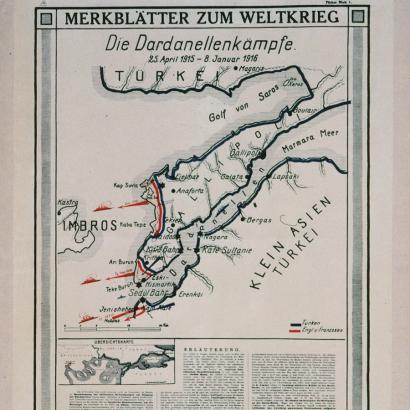
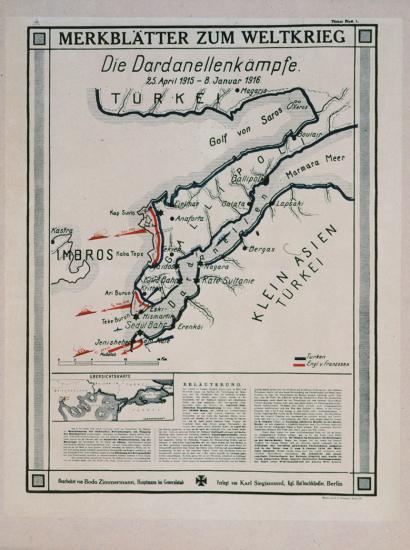
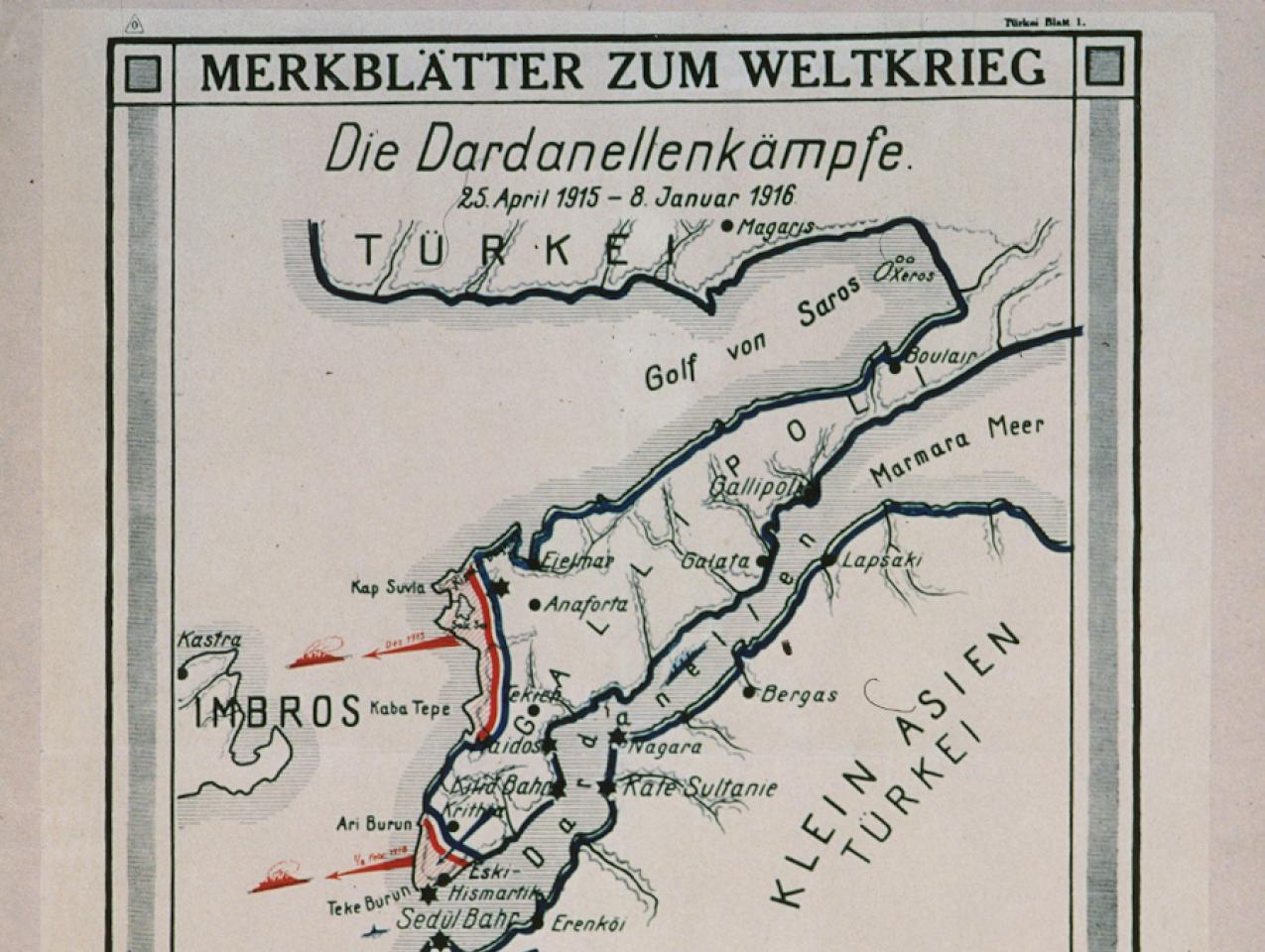
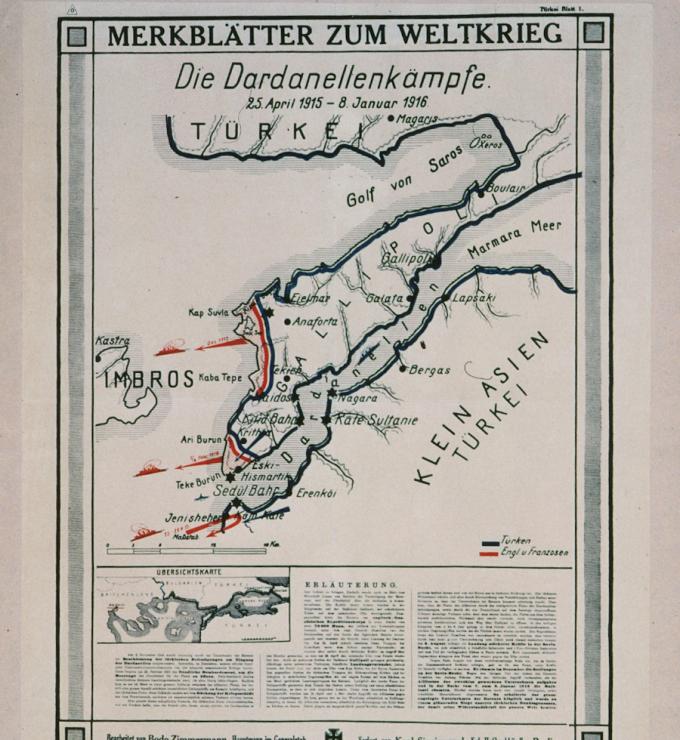
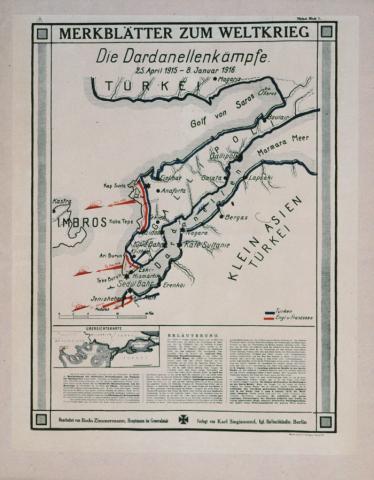
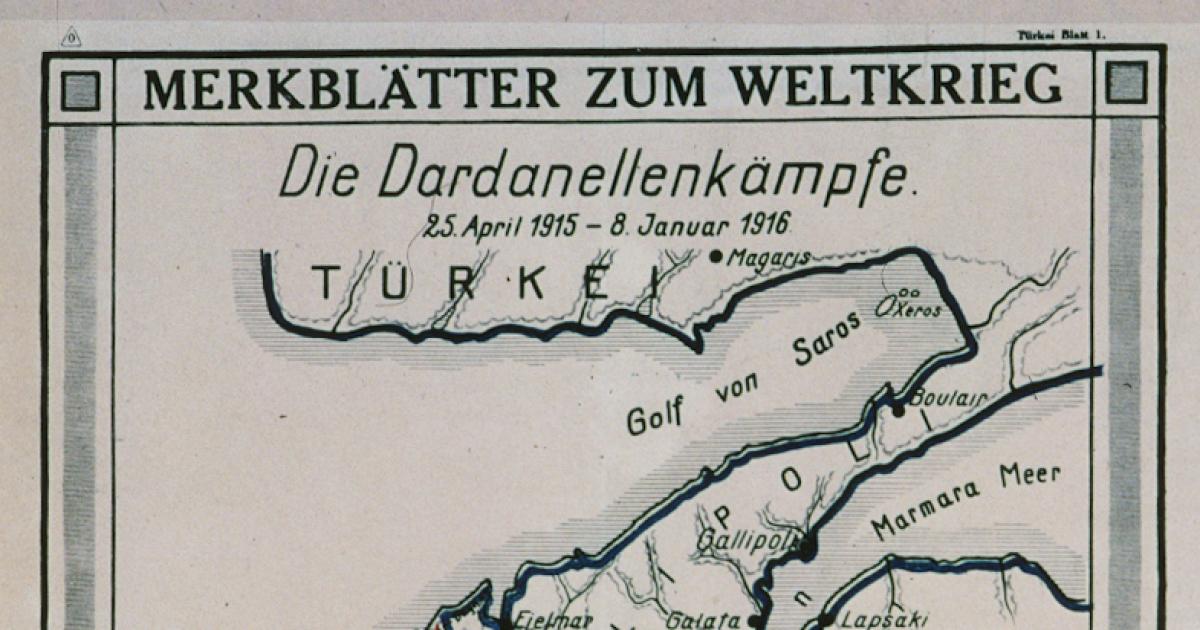
Faced with stalemated trench warfare in France in late 1914, British First Lord of the Admiralty Winston Churchill devised a plan to strategically envelop the Western Front. The Royal Navy and the French Navy would penetrate the Dardanelles Strait to knock the Ottoman Empire out of the war, open a sea route to send arms to beleaguered ally, Russia, and establish a new front in the Balkans to pressure Germany’s ally, the Austro-Hungarian Empire. The concept, like so many of Churchill’s ideas, was creative and innovative. Alas, as was also the case with many of Churchill’s ideas, it failed in execution.
Initial attacks by the Entente fleet in March 1915 failed when Ottoman shore batteries forced minesweepers to withdraw. The main fleet then ran into an uncharted minefield, which sank three battleships and damaged three others. ANZAC and British forces then conducted an amphibious landing in April, but Ottoman resistance inspired by Mustafa Kemal penned the Entente forces into a narrow beachhead and parenthetically led to Churchill’s ousting from his cabinet post. A further landing in August at Suvla Bay was likewise stymied due to uninspired British leadership, which failed to aggressively move units inland before Turkish troops occupied the heights overlooking the beach. After eight months and 188,000 casualties, Entente leaders withdrew their forces, ending the campaign. The Dardanelles remained closed to Entente shipping until the end of the war.
While the current crisis in the Strait of Hormuz is not a precise historical twin to the Dardanelles, the strategic calculus remains unchanged. As soon as fighting commenced, Iran deployed aerial drones to target shipping passing through the strait and then laid sea mines to close the waterway. Although a determined naval armada could probably make its way through the strait into the Gulf, commercial shipping is more vulnerable to Iranian munitions. Civilian sailors manning oil tankers are less likely to brave the gauntlet to transport their cargoes of crude oil to markets in Asia. Even if they were, insurance companies are loath to insure vessels that stand a good chance of being hit by Iranian fire.
As at Gallipoli, the alternative is a seaborne invasion to control the Iranian islands and shoreline, knock out Iranian fast boats, and establish anti-drone bases to open the strait to commercial traffic. Such an operation would require a level of commitment unlikely to be made by the Trump administration, underwritten by Congress, or backed by the majority of the American people. As with the Dardanelles, the Strait of Hormuz is likely to remain closed until the end of hostilities—whenever that may be.

